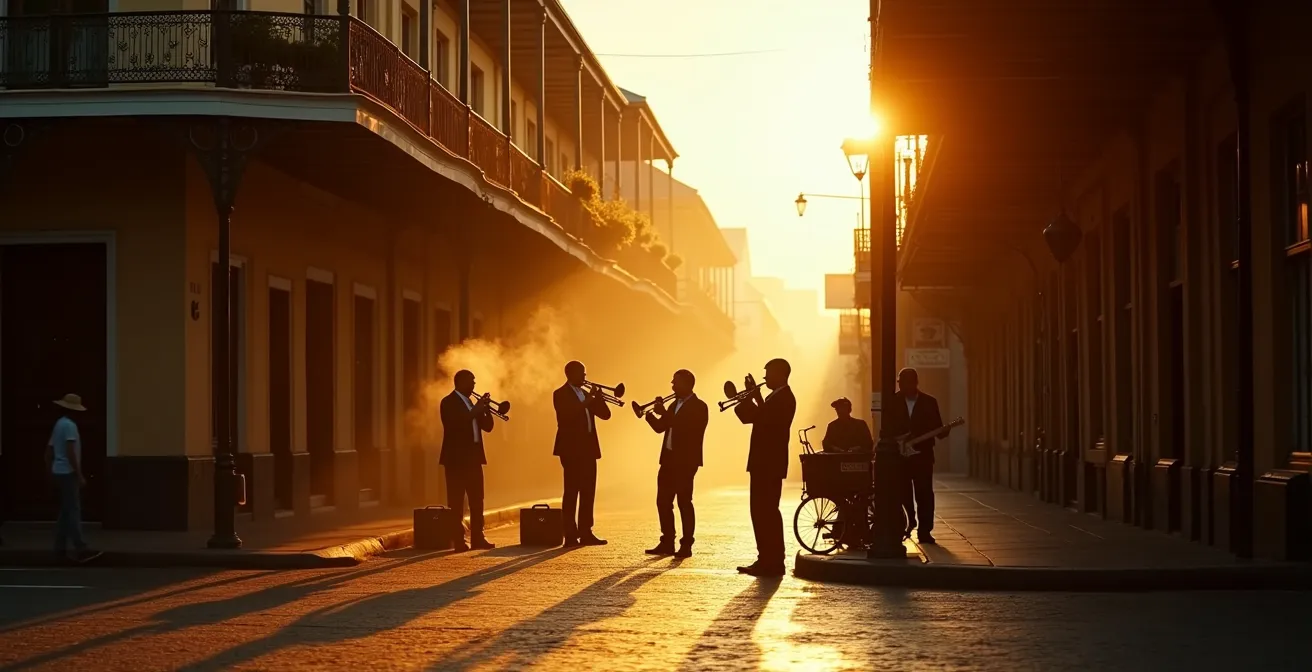
The key to an unforgettable New Orleans music pilgrimage isn’t a bigger budget, but a deeper understanding of how to listen and participate.
- Authentic experiences are found in smaller clubs and off-season visits, which are also more affordable.
- True appreciation is shown not by filming, but through active listening, specific applause, and direct artist support.
Recommendation: Shift your travel goal from being a spectator of famous sights to becoming a participant in the living, breathing music scene of the city.
For any true music lover, the idea of a pilgrimage to New Orleans is electrifying. It’s a journey to the very source, a place where jazz, blues, and funk seem to rise from the cobblestones. Yet, many travelers return with stories of overpriced drinks on Bourbon Street and an experience that felt more like a theme park than a cultural immersion. They went to the city but missed its sonic soul. The common advice to simply “go to Jazz Fest” or “walk through the French Quarter” often leads to crowded, superficial encounters that barely scratch the surface of the city’s profound musical heritage.
The mistake lies in treating the city like a checklist of sights. This approach is not only expensive but emotionally unfulfilling. But what if the secret to a transformative and affordable trip wasn’t about seeing more, but about hearing differently? What if the real key was to move beyond being a passive tourist and learn the language of the local music scene? This guide is built on a different philosophy: that a successful music pilgrimage is about understanding the city’s unique “acoustic terroir” and engaging with its culture as an active, respectful participant.
We will explore how the city’s very architecture shapes its sound and where to find the hidden venues that tourists miss. We’ll delve into the crucial etiquette of listening in a jazz club, the strategic timing for your visit to maximize authenticity and minimize costs, and how to manage the logistics of exploring diverse musical neighborhoods. Finally, we’ll trace the lineage of the music back to its historical roots, completing the pilgrimage not just as a visitor, but as an informed and connected listener.
Summary: Beyond Bourbon Street: How to Plan an Authentic New Orleans Music Pilgrimage on a Budget
- Why Does Music Sound Different in New Orleans Than in Your Living Room?
- How to Find Hidden Jazz Clubs in a New City?
- Mega-Festival or Local Club: Which Offers Better Cultural Immersion?
- The “Tourist” Mistake: Why Filming Everything Ruins the Local Underground Vibe?
- When to Visit New Orleans to Avoid the Crowds and Hear Real Music?
- When to Applaud at a Jazz Club to Not Look Like a Tourist?
- How to Manage the Logistics of a Multi-Neighborhood Music Tour on a Small Budget?
- How to Trace the Lineage of Your Favorite Genre Back to its Roots?
Why Does Music Sound Different in New Orleans Than in Your Living Room?
The magic of live music in New Orleans isn’t just about the world-class musicians; it’s about the rooms themselves. The concept of “acoustic terroir” suggests that a place imparts a unique sonic signature onto the music played within it, much like soil and climate affect a wine’s flavor. In New Orleans, this is not a metaphor but a physical reality. The city’s historic architecture—its high ceilings, old-growth wood, and even the humid air—creates an environment for sound that simply cannot be reproduced by your home stereo system.
Think of iconic venues like Preservation Hall. These are not state-of-the-art concert halls but living instruments. Recent research highlights how historic architectural features create irreplaceable sonic qualities. A 2025 study on acoustic architecture revealed that features like the natural reverb from high tin ceilings and the way sound waves interact with aged wooden structures give the music a warmth and depth that modern, acoustically-treated rooms often lack. The sound isn’t just projected at you; it breathes and envelops you, creating a fully immersive experience.
Even the climate plays a role. Attending a show on a thick, humid summer evening changes the way sound travels. It feels denser, more present. This is the essence of acoustic terroir: a combination of architecture, materials, and atmosphere that makes the music an inseparable part of its location. To truly hear New Orleans, you must seek out these spaces where the buildings themselves are part of the band. It’s the difference between listening to a recording and feeling the music resonate in your bones.
How to Find Hidden Jazz Clubs in a New City?
The most authentic music in New Orleans is rarely found under the brightest neon signs. To find the city’s beating heart, you must adopt the “Second Line” mentality: follow the music, not the map. The true gems are the small, neighborhood clubs and spontaneous jam sessions where local musicians play for each other after their main gigs are over. These are the places where new sounds are born and traditions are passed down, far from the tourist-packed corridors of the French Quarter.
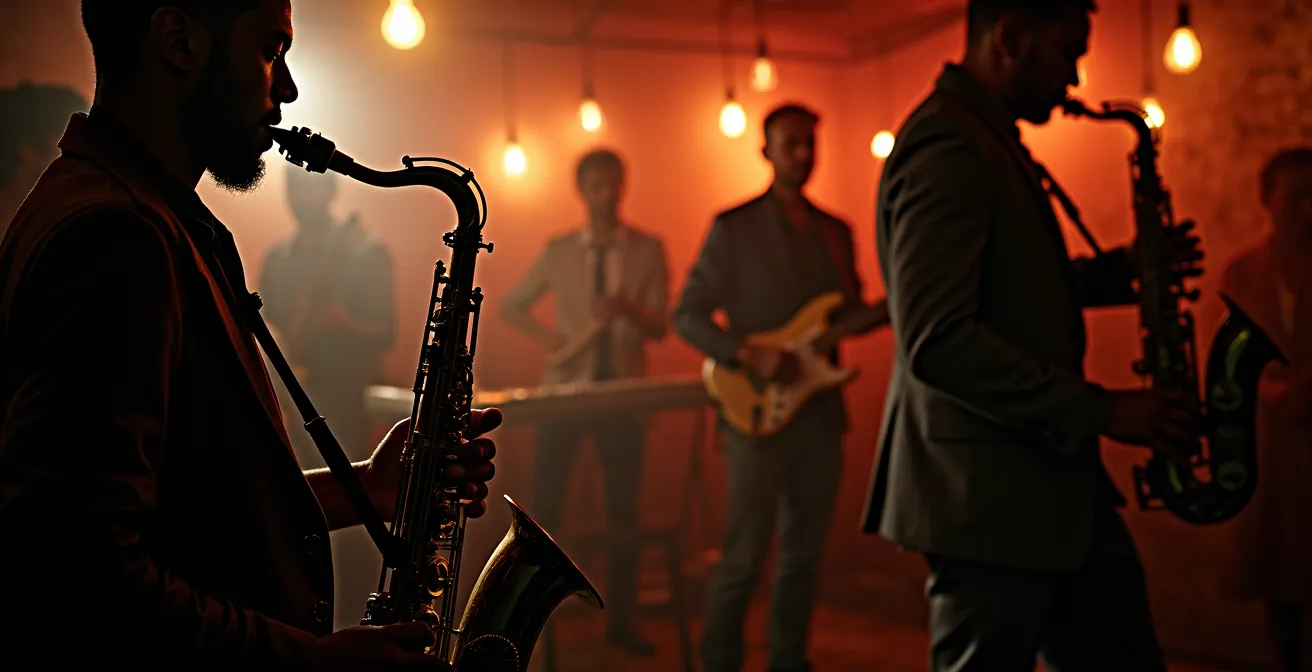
Your best tool for discovery is local knowledge. Start by tuning your radio to WWOZ 90.7 FM, the city’s non-commercial music station. Its Livewire music calendar is an indispensable resource for finding last-minute shows that never make it into mainstream guides. According to WWOZ’s programming statistics, the station broadcasts over 200 live sets featuring 800 local musicians annually, providing a direct line into the real-time pulse of the city. Follow the artists you hear and like on social media; many will post about impromptu performances or late-night sets.
On the ground, your best informants are bartenders, record store clerks, and other musicians. Venture into neighborhoods like the Bywater or Mid-City, step into a local bar, and ask a simple question: “Where do the musicians go after their sets?” This question signals that you’re not a typical tourist, but someone seeking a deeper connection. Visit Louisiana Music Factory to not only buy local music but also to get tips from staff who are deeply embedded in the scene. The goal is to find the places that prioritize the music over the spectacle, where the cover charge is low, the room is small, and the energy is palpable.
Mega-Festival or Local Club: Which Offers Better Cultural Immersion?
The allure of a massive event like the New Orleans Jazz & Heritage Festival is undeniable. It offers a sprawling buffet of music, allowing you to sample dozens of artists in a single weekend. However, for deep cultural immersion, the loud, sprawling environment of a festival can be a barrier. The real connection—the intimate musical dialogue between artist and audience—is often found within the four walls of a small, dimly lit club. So, which path should a music pilgrim choose? The most effective strategy is not to pick one, but to combine both.
Use the mega-festival as your “tasting menu.” It’s an unparalleled opportunity for discovery. You can wander from stage to stage, identifying the artists whose sound resonates with you most. Make a list of these musicians. Then, for the remainder of your trip, your mission is to see them in their natural habitat: the local clubs of Frenchmen Street, the Treme, or the Bywater. This hybrid approach delivers the best of both worlds—the breadth of a festival and the depth of a club experience.
This strategy is not only more fulfilling but also more budget-friendly and supportive of the artists themselves. In a club, a much larger percentage of your money—from the cover charge to direct tips—goes straight into the musicians’ pockets.
The Hybrid Festival-Club Strategy
Music pilgrims report maximum value by using Jazz Fest as a “tasting menu” to discover artists, then following those same musicians to intimate club shows. One visitor spent $95 at Jazz Fest to discover 12 new artists, then saw 5 of them at local venues for $10-15 each, creating deeper connections while supporting musicians directly through cover charges and tips. This transformed a passive festival experience into an active, week-long musical journey.
By adopting this hybrid model, you move from being a mere consumer of a large-scale event to an active patron of the local music ecosystem. You get to see the same world-class performers in two completely different contexts: first on a grand stage, and then up close, where you can see the sweat on their brow and feel the vibrations of the bass drum in your chest.
The “Tourist” Mistake: Why Filming Everything Ruins the Local Underground Vibe?
In the age of the smartphone, the instinct to capture every moment is strong. But in the intimate setting of a New Orleans jazz club, pulling out your phone to film a performance is the quickest way to identify yourself as an outsider. It erects an invisible wall between you, the musicians, and the rest of the audience, instantly shifting your role from participant to spectator. The local vibe is built on a shared, in-the-moment experience, and a glowing screen shatters that connection.
The issue isn’t just about distraction; it’s about respect. A soul-baring trumpet solo or a delicate piano ballad is a moment of vulnerability and deep expression. Filming it can feel invasive, reducing a sacred musical offering to mere digital content. True appreciation is shown not through recording, but through engaged listening. Your focused attention is the most valuable thing you can give a performer. As one local expert puts it, the experience itself is the souvenir.
A phone acts as a barrier, signaling you’re a spectator, not a participant. The real ‘souvenir’ is the feeling, not the footage.
– Nola Tour Guy Guide, New Orleans Free Walking Tour Guidelines
If you feel compelled to support the artist, there are far better ways to do it. The most direct and appreciated method is to tip generously. Look for the band’s Venmo or CashApp QR code, or simply put cash in the tip jar. After the show, buy their merchandise or purchase their music on a platform like Bandcamp. If you want to share their work, post a link to their official social media profile or Spotify page, rather than an unauthorized, poor-quality phone recording. Learning to keep your phone in your pocket is a crucial act of cultural respect that opens the door to a more profound and authentic musical experience.
When to Visit New Orleans to Avoid the Crowds and Hear Real Music?
Timing is everything, especially when planning a trip on a budget. While the magnetic pull of Mardi Gras or Jazz Fest is strong, these peak seasons often come with overwhelming crowds and inflated prices that can detract from an authentic musical experience. The secret shared by seasoned pilgrims is to visit during the “shoulder seasons” or even the quieter off-season. This is when the city breathes, the locals reclaim their favorite spots, and the music scene returns to its most genuine state.

Consider a trip in the winter months of January or February. The weather is mild, the holiday crowds have dispersed, and the city is more relaxed. This timing offers significant financial benefits; a travel budget analysis shows that winter visits (January-February) offer 30-40% lower accommodation costs compared to the spring festival season. This saving alone can fund your entire music budget for the trip, allowing you to attend more shows and tip more generously.
Beyond the season, think about the day of the week. A Tuesday night on Frenchmen Street offers a completely different world than a packed Saturday. On weeknights, the audience is predominantly local. The vibe is more intimate, and the musicians often feel more freedom to experiment and interact. You’re more likely to witness a spontaneous collaboration or hear a new song being tested out. Visiting during these quieter times allows you to experience the city’s music scene not as a major tourist production, but as the living, breathing cultural practice that it is day in and day out.
When to Applaud at a Jazz Club to Not Look Like a Tourist?
One of the most subtle yet powerful ways to transition from a tourist to a respected listener in a New Orleans jazz club is to understand the language of applause. In many music genres, applause is reserved for the end of a song. In jazz, however, it’s an ongoing dialogue. The most important rule to learn is this: applaud after each musician’s solo. This act signifies more than just enjoyment; it’s a recognition of individual artistry and improvisation within the collective performance.
When the saxophonist finishes a blistering, inventive solo and nods to the pianist to take over, that is the moment for a round of applause. It’s a way of saying, “I heard you. I appreciate what you just created.” Waiting until the end of the song to clap is a tell-tale sign of an uninitiated tourist. As local guides often report, observing this single convention can instantly change how you are perceived by both the musicians on stage and the locals in the audience. It transforms you from a passive observer into an active participant in the call-and-response that is central to the jazz tradition.
This dialogue isn’t limited to clapping. Listen to the locals around you. You’ll hear vocal encouragements like a soft “Yeah, you right!” or a guttural “Mmmhmm” during a particularly soulful passage. These are not interruptions; they are affirmations. They are the human element of the musical conversation. Finally, the most sincere form of applause is often financial. Making eye contact with the band and placing a bill in the tip jar during an exceptional solo or as you leave is understood as the highest compliment, a tangible thank you for the art being created right in front of you.
How to Manage the Logistics of a Multi-Neighborhood Music Tour on a Small Budget?
A successful music pilgrimage in New Orleans requires a logistical plan. The city’s music scenes are not concentrated in one area; they are spread across distinct neighborhoods, each with its own character and cost. A smart budget strategy involves allocating funds wisely and leveraging the city’s affordable public transportation to create your own multi-day, multi-neighborhood tour.
First, create a dedicated music budget. A proven allocation strategy for pilgrims is to dedicate about 40% of your daily spending to music itself (venue covers and artist support), 25% to food and local transportation, 20% to merchandise and direct tips, and the final 15% for any historical site visits. This ensures your primary focus remains on the music. To make this budget stretch, consider staying in a centrally located hostel or guesthouse in a neighborhood like Mid-City, which offers easy access to multiple streetcar lines for just $1.25 a ride.
Next, use a neighborhood-based approach to plan your evenings. Don’t try to club-hop across town in one night. Instead, dedicate each night to exploring a specific area’s sonic identity. This minimizes travel time and costs while maximizing immersion. The following table provides a basic guide for navigating the city’s key musical districts.
| Neighborhood | Music Style | Transport Cost | Cover Range |
|---|---|---|---|
| French Quarter | Traditional Jazz | Walk from most hotels | $20-30 |
| Frenchmen Street | Contemporary Jazz/Blues | $1.25 streetcar | $10-20 |
| Bywater | Experimental/Indie | $1.25 bus | $5-15 |
| Treme | Brass Bands/Gospel | Walk/bike | Often free |
| Mid-City | Rock/Funk | $1.25 streetcar | $10-15 |
This table, based on information from guides like NewOrleans.com, illustrates how a strategic approach can give you access to a wide variety of music for a fraction of the cost of staying only in the tourist-heavy French Quarter. By combining smart budgeting with efficient transportation, you can curate a rich and diverse musical journey that is both affordable and authentic.
Action Plan: Auditing Your New Orleans Itinerary for Authenticity
- Points of Contact: List all the channels where the authentic music “signal” is emitted. Are you monitoring WWOZ’s calendar, following 5+ local musicians on social media, and planning to ask bartenders for tips?
- Collect & Inventory: On a sheet of paper, list your “tourist-trap” temptations (e.g., Pat O’Brien’s) on one side and authentic alternatives (e.g., a local’s pick in the Bywater) on the other.
- Coherence Check: Confront your planned activities with your core goal. Does spending three hours on a swamp tour align with your mission of deep musical immersion, or could that time be spent at a place like the Backstreet Cultural Museum?
- Memorability & Emotion: Scan your itinerary. Are you planning for unique, emotional moments (e.g., attending a Sunday gospel service in the Treme) or generic, passive ones (e.g., filming an entire Bourbon Street set)? Prioritize the former.
- Integration Plan: Actively replace at least one “tourist” activity in your current plan with an “authentic” one. Swap the expensive dinner for po’boys and use the savings to buy an album directly from a band after their show.
Key takeaways
- Seek “Acoustic Terroir”: Prioritize historic venues where the architecture itself enhances the music for a truly immersive sonic experience.
- Participate, Don’t Spectate: Show respect and engage with the music by listening actively, applauding solos, and keeping your phone away.
- Budget for Impact: Use your money as a tool for direct support through cover charges, tips, and merchandise, which is the most sincere form of applause.
How to Trace the Lineage of Your Favorite Genre Back to its Roots?
The final layer of a true music pilgrimage is to connect the present-day sounds you’re hearing in the clubs back to their historical origins. The music of New Orleans is a living tradition, a continuum of sound where echoes of the past are constantly felt in the innovations of the present. Tracing this lineage transforms your listening from a simple pleasure into a profound historical exploration, allowing you to hear the centuries of history behind every note.
This journey doesn’t require expensive guided tours. With a tool like the A Closer Walk NOLA music map, you can embark on a self-guided historical pilgrimage for very little cost. A powerful approach is to structure your visit chronologically. For example, a three-day itinerary could look like this: on Day 1, visit Congo Square and the Backstreet Cultural Museum to connect with the African and spiritual roots of the music. On Day 2, experience a show at Preservation Hall to understand the codification and preservation of traditional jazz. On Day 3, immerse yourself in the contemporary brass band scene on Frenchmen Street to witness the genre’s vibrant evolution.
This chronological exploration, costing less than $100 in total for entry fees and covers, provides deep context. When you hear a particular rhythm from a modern brass band, you’ll recognize its origins from the Mardi Gras Indian traditions you learned about at the museum. The pilgrimage begins even before you book your flight. Prime your ears by listening to Alan Lomax’s historical field recordings or diving into the WWOZ archives. This preparation allows you to arrive in New Orleans not as a blank slate, but as a listener prepared to recognize the historical echoes that reverberate through every live performance, completing your journey from tourist to true musical pilgrim.
Now that you have the framework for an authentic and affordable music pilgrimage, the next step is to start building your own personal itinerary. Begin by researching artists, identifying neighborhoods that match your musical tastes, and setting a budget that prioritizes direct support for the culture you’ve come to experience.
Frequently Asked Questions on How to Plan a Music Pilgrimage to New Orleans on a Budget?
When should I applaud during a jazz performance?
Applaud after each musician’s solo, not just at the end of songs. This shows you understand and appreciate individual artistry within the ensemble.
What vocal encouragements are appropriate in New Orleans clubs?
Use phrases like ‘Yeah, you right!’, ‘Play it!’, or a simple ‘Mmmhmm’ to show deep listening. These are part of the call-and-response tradition.
How and when should I tip musicians?
Put cash in the tip jar during exceptional solos or when leaving, making eye contact with the band. This is considered the most sincere form of applause.