Concerts and Festivals
Standing in a crowd as bass frequencies ripple through your chest, or navigating the complex logistics of a three-day camping festival—these experiences define contemporary music culture in ways that streaming services never could. Concerts and festivals represent far more than entertainment: they’re ecosystems where neuroscience meets economics, where emerging artists forge careers, and where communities grapple with questions of sustainability, inclusivity, and cultural authenticity.
Whether you’re a first-time festival-goer trying to understand why hydration strategies matter, an artist preparing for a showcase set, or simply curious about what makes live music so uniquely powerful, this landscape encompasses scientific phenomena, ethical considerations, and intensely practical survival skills. The following exploration connects the dots between the physical sensation of sound waves, the economics of mega-events, the realities of music industry networking, and the tangible challenges of keeping your belongings safe while camping in a field with fifty thousand strangers.
The Science Behind Why Live Music Moves Us
The human response to live music operates on multiple biological levels simultaneously. Unlike recorded audio experienced through headphones, a live concert creates what researchers call collective effervescence—a psychological state where individual consciousness merges with group energy, producing measurable changes in stress hormones and neural synchronization across audience members.
How Bass Frequencies Affect Your Body
Low-frequency sound waves don’t just reach your ears—they travel through bone, tissue, and organs. When a kick drum hits at 60 Hz or a bass guitar resonates at 80 Hz, your body becomes part of the instrument. This tactile dimension of sound explains why the same song feels fundamentally different live versus through speakers. Your vestibular system (which controls balance) and proprioceptive sensors respond to these vibrations, creating a full-body listening experience that recorded music rarely achieves.
Active Listening Versus Passive Consumption
Concert environments demand what musicians call “active listening”—a focused attention that differs markedly from background music during a commute. This practice involves:
- Tracking multiple instrumental layers simultaneously
- Observing performer technique and physical expression
- Noticing improvisation and spontaneous variations
- Feeling spatial acoustics and how sound moves through architecture
This heightened awareness creates stronger memory formation. Decades later, people vividly recall specific concerts, while thousands of streamed songs blur into forgettable background noise. The cognitive effort required creates lasting neural pathways.
Managing the Risks and Recovery
The same physical intensity that makes concerts thrilling also carries risks. Prolonged exposure to sound levels above 85 decibels causes cumulative hearing damage—often imperceptible until significant loss has occurred. Quality earplugs designed for music (which reduce volume while preserving frequency balance) represent essential equipment, not optional accessories.
Equally important is understanding the post-concert comedown. The neurochemical cocktail of dopamine, oxytocin, and adrenaline that peaks during a show doesn’t dissipate instantly. The feelings of emptiness or mild depression some people experience afterward stem from this biochemical transition, not from any personal failing.
The Environmental and Economic Reality of Modern Festivals
Large-scale music festivals function as temporary cities, with corresponding environmental footprints and economic impacts that ripple through local communities in complex ways. A major three-day festival might generate carbon emissions equivalent to several thousand transatlantic flights while simultaneously injecting millions into regional economies—or extracting value while leaving little behind.
The rise of “glamping” (glamorous camping with pre-erected luxury tents, real beds, and private bathrooms) illustrates how festival demographics shift when price points increase. Events that once celebrated countercultural accessibility increasingly cater to affluent professionals willing to spend thousands for comfort. This transformation changes not just who attends, but the entire cultural atmosphere.
Waste reduction methodologies have become critical as festivals face regulatory pressure and public scrutiny. Effective approaches include:
- Eliminating single-use plastics through deposit-return systems for cups
- Composting organic waste generated by food vendors
- Requiring attendees to take home all camping equipment (discarded tents represent a massive waste problem)
- Partnering with organizations that redistribute leftover food
The tension between local economic benefit and corporate profit extraction defines many community relationships with festivals. When a multinational promoter stages an event, do ticket revenues circulate through local businesses, or does money flow primarily to external stakeholders? The risk of cultural gentrification—where longstanding community events get displaced by commercial festivals that raise property values and living costs—has become a flashpoint in many cities.
Industry Showcases: Where Talent Meets Opportunity
For emerging artists, showcase festivals represent a paradoxical space where the music often matters less than the networking. These industry-focused events function as job fairs disguised as concerts, where booking agents, label representatives, and festival programmers scout talent during concentrated windows of opportunity.
Success in this environment requires understanding that your 30-minute set serves multiple purposes simultaneously. You’re performing for the small audience present, but you’re really auditioning for the dozen industry professionals scattered throughout the venue. This demands meticulous preparation:
- Front-loading your strongest material (never “warming up” when you have 30 minutes)
- Tight transitions that maximize music time
- Professional stage presence that demonstrates you can handle larger venues
- Technical self-sufficiency despite the gap between your tech rider and actual reality
The controversial “pay-to-play” model—where artists must purchase tickets to sell or guarantee minimum bar sales—exploits this desperation for exposure. Legitimate showcases cover costs through sponsorship and attendee tickets, not by charging performers for the privilege of working.
The most crucial phase occurs after your set. Strategic follow-up with contacts made during the event separates artists who gain traction from those who deliver great performances that nobody remembers. This means collecting business cards, sending personalized emails within 48 hours, and maintaining relationships beyond transactional requests.
Building Truly Inclusive Music Programming
Genuine inclusivity in music programming extends far beyond tokenistic diversity—adding one artist from an underrepresented background to an otherwise homogeneous lineup. Meaningful representation requires examining power structures: who makes booking decisions, whose aesthetic preferences define “quality,” and which communities feel welcomed versus tolerated.
Representation matters particularly for younger audiences forming their sense of possibility. When children see performers who share their background, gender, or physical abilities on major stages, it fundamentally reshapes what they believe themselves capable of pursuing. This isn’t abstract social theory—it’s the practical mechanism through which musical cultures either perpetuate existing hierarchies or evolve.
Finding global talent demands methodology that goes beyond curating Spotify playlists. It requires:
- Building relationships with music communities in specific regions
- Understanding local scenes well enough to distinguish authenticity from commercial imitation
- Navigating the line between cultural appreciation and appropriation
- Recognizing that “exotic” sounds to one audience represent everyday music to another
Optimizing accessibility for diverse audiences means addressing physical barriers (wheelchair access, viewing platforms, sensory-friendly spaces), economic barriers (sliding-scale tickets, volunteer opportunities), and cultural barriers (multilingual information, diverse food options that respect dietary restrictions). Each element signals whether an event genuinely welcomes everyone or merely tolerates their presence.
Music Tourism and the Quest for Authentic Scenes
The phenomenon of music tourism—traveling specifically to experience local scenes in their native context—reflects a hunger for authenticity that feels increasingly rare in globalized culture. The same song performed in its city of origin carries different resonance than a touring show, because context fundamentally changes sound. Jazz in New Orleans, electronic music in Berlin, or samba in Rio de Janeiro each carry cultural weight that transcends the notes themselves.
Discovering underground venues requires different skills than browsing festival lineups. It means talking to record store employees, following local music journalists, attending weeknight shows at small clubs, and accepting that the best experiences rarely appear in tourist guides. The methodology resembles investigative journalism more than vacation planning.
The eternal question—festivals versus small clubs for discovery—depends on what you’re seeking. Festivals offer concentrated exposure to dozens of artists, functioning as cultural sampling menus. Small clubs provide intimacy and the possibility of witnessing artists before broader recognition, but require more research and risk-taking on unknown performers.
Respectful music tourism requires awareness of local norms around photography, audience participation, tipping, and appropriate behavior. The risk of disrespecting community spaces is real—when outsiders flood local venues without understanding unwritten rules, they can damage the very scenes they came to experience. Timing matters too: visiting during major cultural celebrations versus ordinary weekends produces entirely different experiences.
The Art of Curating Multi-Genre Experiences
Programming a multi-genre festival resembles orchestrating a complex conversation between different musical languages. Done thoughtfully, genre clashes become discovery points—moments where an audience predisposed to electronic music encounters jazz improvisation, or where folk enthusiasts unexpectedly connect with hip-hop lyricism. Done carelessly, it creates a fractured audience where competing fan bases tolerate each other while waiting for their preferred acts.
Transition times between acts require as much consideration as the performances themselves. Rushing changeovers creates technical problems and stressed artists; excessive gaps kill momentum and leave audiences restless. The optimal flow balances practical reality (equipment setup requirements) with maintaining energy.
The fundamental programming tension exists between niche appeal—booking deeply within specific genres to serve devoted fans—and broad appeal that attracts diverse audiences but risks satisfying no one completely. Most successful festivals stake a clear position while incorporating strategic variety. A primarily rock festival might include two electronic acts that share sonic intensity rather than attempting equal representation across ten genres.
Site mapping for multi-stage events dramatically impacts audience experience. Placing competing headliners simultaneously on opposite ends of the grounds forces difficult choices; strategic scheduling allows natural flow between complementary artists. Sound bleed between nearby stages can either create chaotic noise pollution or interesting sonic collisions, depending on programming awareness.
Surviving and Thriving at Multi-Day Camping Festivals
The romantic notion of festival camping confronts harsh physical reality around hour six of day one, when sleep deprivation, questionable hygiene, and logistical challenges begin compounding. Successful navigation requires treating it as a endurance event that happens to include live music, not a series of concerts with incidental camping.
Hydration, Nutrition, and Energy Management
Hydration isn’t just about water—it’s about electrolyte balance. Sweating for hours in summer heat while consuming alcohol depletes sodium, potassium, and magnesium faster than water alone replaces. Bringing electrolyte tablets or sports drinks prevents the headaches and fatigue many attribute to hangovers but that actually stem from mineral depletion.
The risk of burning out on day one comes from front-loading energy expenditure. Attempting to see every artist creates a debt of exhaustion that ruins later days. Strategic rest—missing mid-tier acts to nap, eating substantial meals instead of just snacking, finding shade during peak heat—separates those who thrive through Sunday from those barely surviving.
Security and Practical Logistics
Theft prevention methodology starts with assuming anything visible will disappear. Essential approaches include:
- Keeping valuables on your person in secure, buttoned pockets
- Using small locks for tent zippers (not theft-proof, but deterrents matter)
- Establishing distinctive landmarks near your campsite for navigation after dark
- Photographing your tent location and nearby identifiers
The boots versus sneakers debate ultimately depends on terrain and weather. Waterproof boots provide ankle support and protection in muddy conditions but cause overheating in dry heat. Quality sneakers with good arch support work better for extended walking on firm ground. Many experienced festival-goers bring both, adapting to conditions.
Group rendezvous planning prevents the frustration of lost friends in crowds of tens of thousands. Establishing specific meeting points (“the left side of the sound booth at 3:15 PM”) works better than vague plans. Accepting that groups will fragment and reformulate throughout the event reduces anxiety.
Ultimately, concerts and festivals serve as cultural laboratories where we explore fundamental questions about community, authenticity, sustainability, and the peculiar human need to gather in fields and warehouses to experience organized sound waves together. Understanding the science behind why these events move us, the economics that shape their existence, the industry mechanisms that develop talent, and the practical skills that make them survivable transforms passive attendance into engaged participation. Whether you’re analyzing the neuroscience of collective effervescence or simply trying to keep your phone charged for three days, this knowledge deepens appreciation for one of humanity’s oldest and most persistently relevant cultural practices.
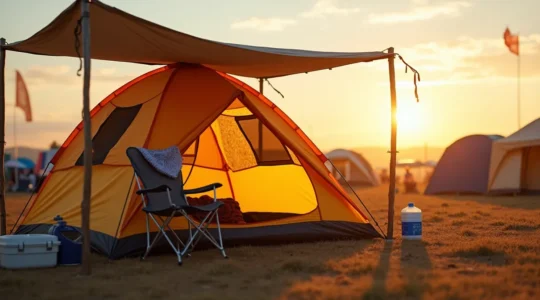
How to Actually Sleep in a 30°C Festival Tent: A Survivalist’s Guide
Surviving a sweltering festival isn’t about cooling your tent; it’s about strategically managing your body’s core systems like a seasoned operative. Dehydration is caused by electrolyte loss, not just a lack of water. Active hydration is key. Pacing your energy…
Read more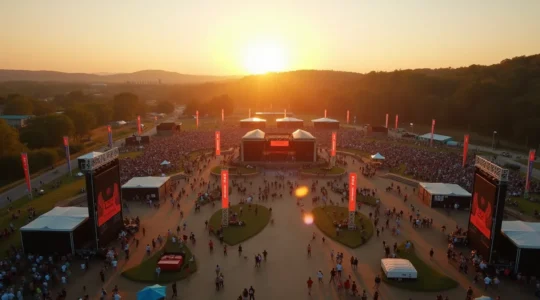
How to Manage Sound Bleed Between Stages at Multi-Genre Festivals?
Managing sound bleed at multi-genre festivals goes beyond physical distance and acoustic barriers. The most effective strategy lies in temporal and spectral programming—using the schedule itself as a tool. By intelligently sequencing genres with different frequency profiles and calculating precise…
Read more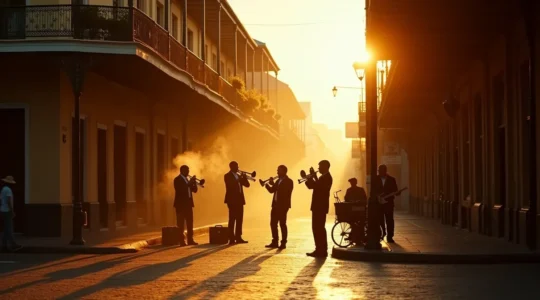
Beyond Bourbon Street: How to Plan an Authentic New Orleans Music Pilgrimage on a Budget
The key to an unforgettable New Orleans music pilgrimage isn’t a bigger budget, but a deeper understanding of how to listen and participate. Authentic experiences are found in smaller clubs and off-season visits, which are also more affordable. True appreciation…
Read more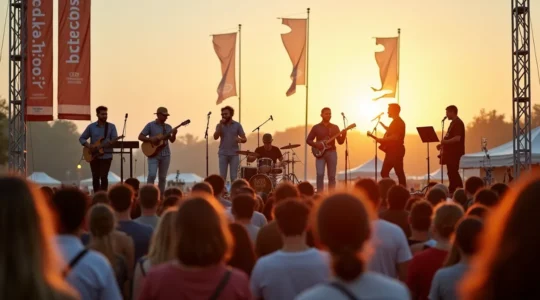
How to Curate a Truly Diverse Lineup Without Falling into Tokenism?
Achieving genuine lineup diversity isn’t about hitting demographic quotas; it’s about re-engineering your entire curation process into an inclusive ecosystem. Performative diversity focuses on optics, while authentic inclusion builds structural support for artists and audiences. Effective artist discovery requires moving…
Read more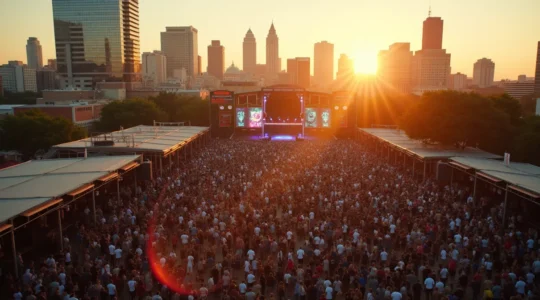
How to Stand Out at SXSW When You Are One of 2,000 Bands?
Success at SXSW isn’t about being the best band; it’s about being the easiest band to do business with. The most crucial conversations happen in hotel lobbies and coffee shops, not in front of a loud stage. Your 30-minute set…
Read more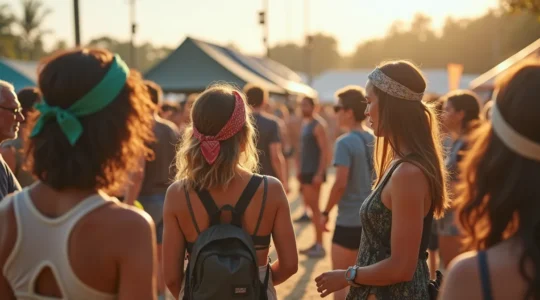
How to Assess the Environmental Impact of Your Festival Weekend?
Your true festival footprint extends far beyond the trash you generate; it’s a complex blend of environmental, economic, and cultural consequences. The rise of “glamping” and luxury amenities creates a culture of systemic consumption that undermines sustainability efforts. Mega-festivals often…
Read more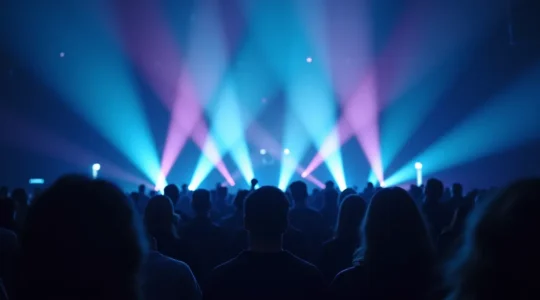
Why Does Live Music Trigger a Stronger Dopamine Response Than Headphones?
The intense euphoria of a live concert is not just in your head; it is a full-body neurobiological event that recorded music cannot replicate. Your body doesn’t just hear bass; it physically detects it through specialized mechanoreceptors in your skin…
Read more