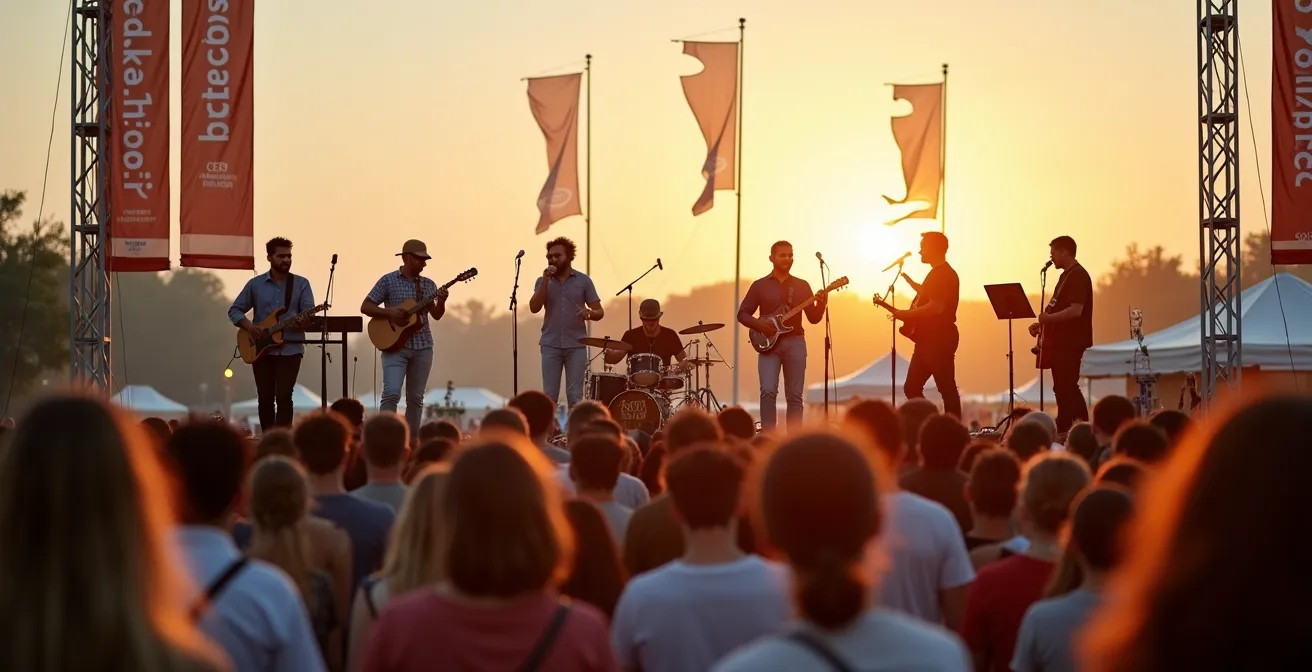
Achieving genuine lineup diversity isn’t about hitting demographic quotas; it’s about re-engineering your entire curation process into an inclusive ecosystem.
- Performative diversity focuses on optics, while authentic inclusion builds structural support for artists and audiences.
- Effective artist discovery requires moving beyond Western streaming algorithms and engaging directly with communities.
Recommendation: Shift your focus from a checklist of identities to building a holistic system of discovery, ethical collaboration, and audience experience that fosters belonging.
As a festival booker or playlist curator, the pressure is immense. Audiences, artists, and critics demand lineups that reflect the world’s rich diversity. The default response is often a frantic scramble to meet quotas—adding a certain percentage of women, artists of color, or international acts. This numbers-driven approach, while sometimes well-intentioned, frequently backfires, leading to accusations of tokenism where artists feel like checkboxes rather than creative partners.
The common solutions often fall short. A segregated “world music” stage can feel like a ghetto, and simply booking the same few well-known diverse artists reinforces the very industry bottlenecks you’re trying to break. This creates a cycle of performative action that looks good in a press release but fails to foster a truly inclusive environment. The problem isn’t the desire for diversity; it’s the superficial methodology used to achieve it.
But what if the key wasn’t simply changing *who* is on the poster, but fundamentally rebuilding *how* you discover, program, and present them? The most forward-thinking curation moves beyond mere representation and toward building a self-sustaining inclusive ecosystem. This approach treats diversity not as a final goal, but as the natural outcome of a healthier, more equitable system. It requires shifting from a mindset of filling slots to one of fostering connections—between artists, genres, and communities.
This guide will walk you through the structural changes required for this shift. We will deconstruct lazy labels, establish frameworks for ethical collaboration, and explore how to transform your entire venue into a space of genuine welcome. It’s a blueprint for moving from performative metrics to profound and lasting cultural impact.
Summary: How to Curate a Truly Diverse Lineup Without Falling into Tokenism?
- Why Does Seeing Someone Like You on Stage Increase Music Participation?
- How to Scout Artists Outside of Western Streaming Algorithms?
- Appreciation or Appropriation: Where Is the Line for Collaboration?
- The “World Music” Label Mistake: Why Grouping Continents Together Is Lazy?
- When Does a Lineup Cross the Line From Diverse to Performative?
- How to Make Your Venue Welcoming to Communities You Don’t Usually Serve?
- Why Is Putting a Rapper After a Rock Band a Smart Programming Move?
- How to Manage Sound Bleed Between Stages at Multi-Genre Festivals?
Why Does Seeing Someone Like You on Stage Increase Music Participation?
The power of representation extends far beyond a feeling of validation; it is a direct driver of audience engagement and cultural participation. When attendees see artists on stage who share their background, identity, or experience, it sends a powerful message: “You belong here. This music is for you, too.” This sense of belonging is a catalyst, transforming passive listeners into active participants who are more likely to buy tickets, engage with new music, and become lifelong fans.
This isn’t just a social theory; it has proven commercial benefits. An artist’s visibility inspires emerging talent from the same community, creating a virtuous cycle that enriches the entire music ecosystem. It also signals to a wider audience that a festival is a space of genuine cultural curiosity, attracting demographics who may have previously felt excluded.
Case Study: Primavera Sound’s 50/50 Gender Split Success
A prime example of this principle in action is Primavera Sound. Since 2019, the festival has maintained a commitment to a 50/50 gender split in its lineup, a pledge initiated by the PRS Foundation’s Keychange initiative. This wasn’t just a performative gesture. The result was a tangible increase in international appeal, with the festival reporting that 52% of their audience comes from outside of Spain. By making a structural commitment to gender equality, they signaled a progressive and inclusive identity that resonated with a global audience, proving that equitable programming is a powerful tool for growth.
Ultimately, seeing oneself reflected on stage dismantles invisible barriers. It confirms that one’s own stories and perspectives have value within the broader cultural conversation, which is the foundational stone of building a loyal and diverse community around your event or platform.
How to Scout Artists Outside of Western Streaming Algorithms?
The biggest barrier to true lineup diversity is often the default discovery process itself. Streaming algorithms are designed to create feedback loops, reinforcing what is already popular within dominant markets. Relying on them exclusively means you are fishing in a very small, homogenous pond. To find genuinely fresh and underrepresented talent, curators must adopt a strategy of post-algorithmic discovery—actively seeking sources beyond the digital mainstream.
This requires a journalistic and anthropological approach. It means building relationships with cultural gatekeepers who are deeply embedded in specific scenes: local community leaders, independent radio DJs, fanzine creators, and micro-influencers. These individuals have their fingers on the pulse of emerging scenes long before they hit any algorithm’s radar. Instead of just consuming content, you must actively cultivate a network of trusted human sources.
As the image suggests, the world of music is a vast, interconnected network, not a top-down list. Your job is to map these connections. Here are some concrete strategies for diversifying your discovery channels:
- Partner with diversity-focused organizations and cultural centers for authentic connections.
- Leverage the networks of your currently booked artists; ask them who they’re listening to and who is innovating in their communities.
- Engage directly with communities through surveys, forums, and local events to understand their musical preferences and identify local heroes.
- Cultivate emerging talent directly through your own open mic nights, artist development programs, or talent contests.
This ground-up curation model is more labor-intensive than scrolling through a playlist, but it yields a lineup that is not only diverse but also deeply authentic and rooted in real communities, creating a far more compelling story for your festival.
Appreciation or Appropriation: Where Is the Line for Collaboration?
As curators bring together artists from different cultural backgrounds, they inevitably navigate the fine line between celebrating a culture (appreciation) and exploiting it (appropriation). The distinction is not merely academic; it has real-world consequences for artists’ careers and cultural integrity. Dr. Diljeet Bhachu of the Musicians’ Union Equality, Diversity and Inclusion Office highlights the core of the issue, noting the industry is having “lots of conversations… about what well-intentioned efforts look like versus tokenistic ones.” The difference often lies in power, compensation, and credit.
Appropriation typically occurs when a dominant culture borrows elements from a marginalized culture without permission, credit, or fair compensation, often reinforcing stereotypes in the process. Appreciation, in contrast, is based on respect, consent, and equitable exchange. A collaboration rooted in appreciation ensures the source artist has equal creative control and shares fairly in the financial and reputational rewards. It’s about building a bridge, not just taking a souvenir.
To move from ambiguity to action, curators need a clear ethical framework. The following checklist can help evaluate potential collaborations to ensure they are built on a foundation of mutual respect.
| Ethical Dimension | Appropriation Red Flags | Appreciation Best Practices |
|---|---|---|
| Narrative Power | Source culture artist as ‘feature’ only | Equal creative control and primary artist credit |
| Compensation | One-time fee only | Equitable splits in publishing, masters, merchandise |
| Cultural Representation | Reinforces stereotypes | Subverts expectations, shows full artistic range |
| Credit Attribution | Minimal acknowledgment | Prominent co-creation credits |
By using such a framework, curators can move beyond good intentions and implement a structured process that protects artists and ensures collaborations are genuinely additive for everyone involved, enriching the cultural landscape rather than exploiting it.
The “World Music” Label Mistake: Why Grouping Continents Together Is Lazy?
The term “World Music” has long been a convenient but deeply flawed categorization. Initially intended to help market non-Western music, it has devolved into a lazy catch-all that flattens immense cultural diversity into a single, exoticized genre. Grouping the intricate Gnawa trance of Morocco with the polyrhythmic percussion of Colombia and the throat-singing of Tuva is not just inaccurate; it’s a form of curatorial negligence. It suggests that these rich, distinct traditions are interchangeable and only defined by their opposition to a Western norm.
This practice perpetuates a colonial mindset and hinders true discovery. When an artist is labeled “world music,” their specific genre, history, and artistic innovation are erased. For an audience, it creates a barrier to understanding, suggesting the music is impenetrably “other.” Breaking free from this label is essential for building a truly global and sophisticated lineup. The goal is to present artists on their own terms, celebrating their specific context rather than their continent of origin.
Instead of relying on this outdated bucket, curators should adopt more descriptive and imaginative categorization strategies. This not only shows greater respect for the artists but also provides audiences with more meaningful entry points to their music. Effective curation educates as it entertains. In fact, data indicates that festivals with 5 or more diverse genres attract larger, more varied audiences, proving that specificity and diversity are commercially smart.
Here are some alternative approaches:
- Curate by mood or theme, such as ‘Ancestral Rhythms’, ‘Introspective Electronica’, or ‘High-Energy Brass’.
- Organize by sonic texture and instrumentation, grouping artists by their sound palette rather than their passport.
- Create narrative-driven descriptions that focus on the artist’s unique story and the social context of their music.
- Highlight specific musical traditions and their modern evolution, like ‘Contemporary Afrobeat’ or ‘Experimental Cumbia’.
By retiring the “world music” label, you empower artists to be seen for their unique craft and invite your audience into a more nuanced and rewarding journey of musical discovery.
When Does a Lineup Cross the Line From Diverse to Performative?
A lineup can feature artists from every continent and still be profoundly tokenistic. The line between authentic diversity and performative action is crossed when the *appearance* of inclusivity becomes more important than the *experience* of the artists and communities involved. Performative diversity uses marginalized artists as props to signal virtue without making any of the structural changes needed to ensure they are respected, safe, and equitably compensated. It’s a marketing strategy, not a cultural one.
The consequences of this are severe. It creates an environment where artists feel othered and exploited. More alarmingly, a venue that is only superficially inclusive often fails to create a genuinely safe space for attendees. The disparity is stark, as research reveals that 59% of gender minorities experienced inappropriate behavior at festivals, compared to 34% of women. This data shows that simply putting a diverse face on a poster does nothing to address the underlying systemic issues that make these spaces unsafe.
True inclusivity is about structural empathy—building systems that actively support and protect marginalized individuals. This means looking beyond the lineup and examining everything from pay equity and stage placement to security training and backstage hospitality. It’s about asking not just “Who is on our stage?” but “What is their experience once they are here?”
Action Plan: Performative Diversity Red Flag Checklist
- Artist Placement: Check if marginalized artists are consistently relegated to smaller stages or early, low-attendance time slots.
- Pay Equity: Audit your budgets to verify that artists from underrepresented backgrounds are paid equitably compared to their dominant-culture peers of similar stature and draw.
- Marketing Narrative: Assess whether marketing materials highlight an artist’s identity more than their actual artistry, reducing them to a demographic.
- Artistic Freedom: Monitor if artists are subtly or overtly pressured to perform their trauma or conform to stereotypes rather than showcasing their full artistic range.
- Post-Festival Impact: Track the career trajectories of diverse artists you “discover.” Are you a stepping stone or a dead end? Genuine support leads to further opportunities.
If your curation practices trigger several of these red flags, it is a clear sign that your efforts have veered into the performative. The goal is to create an environment where artists don’t just appear, but thrive.
How to Make Your Venue Welcoming to Communities You Don’t Usually Serve?
A truly diverse lineup is only half the battle. If the audience you hope to attract doesn’t feel safe, comfortable, or seen at your venue, your efforts on stage will be wasted. Building an inclusive ecosystem means extending the principles of diversity from the performers to the attendees. This requires a holistic audit of the entire audience journey, from the moment they visit your website to the moment they leave the event.
This process of building structural empathy means anticipating the needs of communities you may not have previously served. This includes people with disabilities, neurodivergent individuals, attendees from different religious or cultural backgrounds, and members of the LGBTQ+ community. Simple changes can make a world of difference, such as providing clear accessibility information, offering sensory-friendly spaces, and ensuring diverse food options are available.
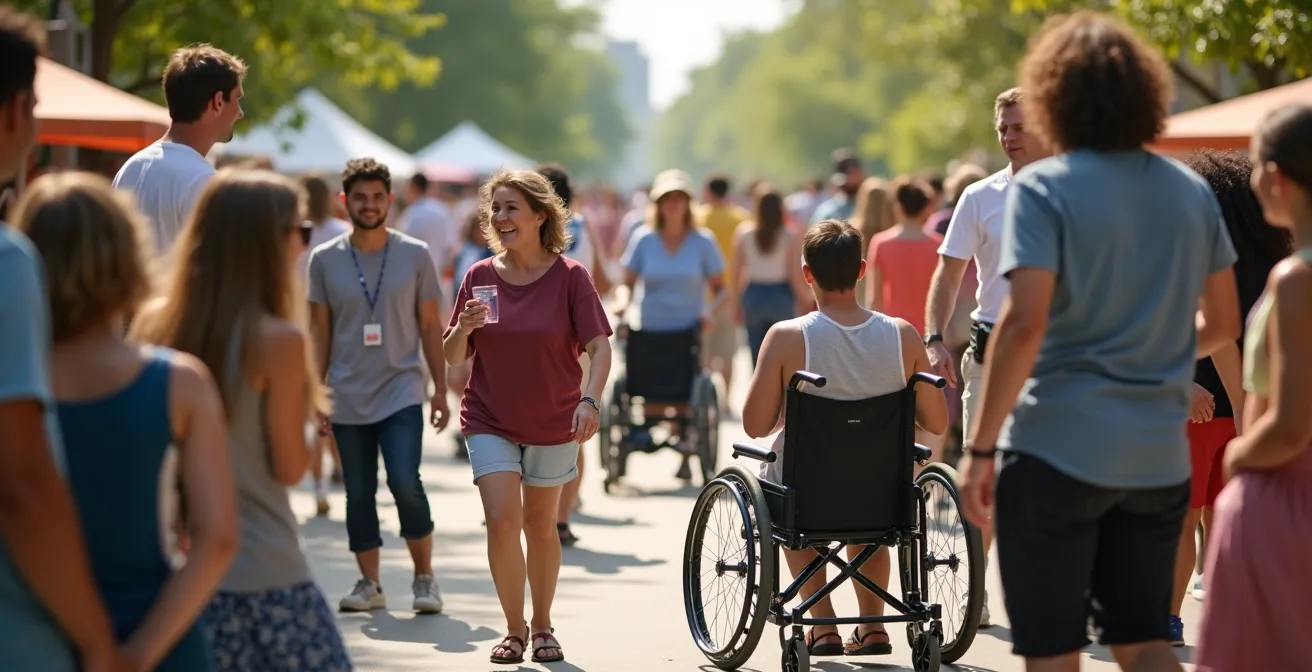
The success of organizations like KultureCity demonstrates the power of this approach. By providing sensory-inclusive certifications, dedicated quiet lounges, and sensory bags, they have made large-scale venues accessible to individuals with sensory sensitivities. This isn’t just about compliance; it’s about proactively designing a space for human comfort and belonging. A welcoming venue is your most powerful marketing tool for reaching new audiences.
Consider the entire user journey with this comprehensive approach:
- Before the Event: Your website should provide clear and detailed accessibility information, offer multilingual options where appropriate, and perhaps even a “social story” video walkthrough for neurodivergent attendees.
- During the Event: Create designated quiet rooms or calm zones for sensory relief. Ensure staff are trained to recognize and assist with invisible disabilities. Offer all-gender restrooms and inclusive food options (e.g., halal, vegan).
- After the Event: Implement accessible feedback mechanisms in multiple formats and languages to continuously learn from your community and improve their experience.
By focusing on the lived experience of every potential guest, you transform your venue from a simple location into a true community hub.
Key Takeaways
- True diversity is an ecosystem, not a checklist. Shift focus from hitting quotas to building a supportive structure for artists and audiences.
- Authentic artist discovery requires moving beyond lazy algorithms and actively engaging with community leaders, zines, and local radio.
- Inclusivity extends beyond the stage. A venue’s accessibility, safety protocols, and staff training are crucial for making diverse audiences feel they belong.
Why Is Putting a Rapper After a Rock Band a Smart Programming Move?
Great curation isn’t just about who you book; it’s about the story you tell by how you sequence them. Placing seemingly disparate genres next to each other—like a rapper after a rock band—is more than a bold choice; it’s a strategic move that can create a powerful sonic narrative. This juxtaposition encourages audience discovery, breaks down genre tribalism, and generates a unique energy that can only be experienced at your event. It transforms a passive listening experience into an active journey of exploration.
When an audience that came for rock is exposed to a compelling hip-hop artist (and vice-versa), you are engineering moments of serendipitous discovery. This cross-pollination is a hallmark of the most memorable festivals. It challenges an audience’s preconceptions and expands their musical palate, creating a more dynamic and engaging atmosphere for everyone. This kind of adventurous programming is a key driver of market growth, with the festival sector projected to grow at a CAGR of 24% from 2024 to 2031, fueled by the demand for immersive and unique experiences.
The key to successful cross-genre programming is finding a thematic or energetic thread that connects the artists. This could be a shared lyrical theme (e.g., social justice), a similar level of raw energy, or a complementary rhythmic foundation. The transition shouldn’t feel random but intentional, as if you are guiding the audience through different chapters of the same story. This approach positions you not just as a booker, but as a true curator and tastemaker.
By thoughtfully blending genres, you create a lineup that is more than the sum of its parts. You build a reputation for bold, intelligent programming that attracts a more open-minded and curious audience, solidifying your event’s unique cultural identity.
How to Manage Sound Bleed Between Stages at Multi-Genre Festivals?
As festivals embrace multi-genre programming and expand in scale, a critical technical challenge emerges: sound bleed. The sonic clash of a bass-heavy electronic set bleeding into an intimate acoustic performance can ruin the experience for both artists and audiences, undermining the very diversity you’ve worked hard to curate. With 2,184 festivals featuring 45,522 artists globally in 2024, the scale of modern events makes sophisticated sound management an absolute necessity, not a luxury.
Effectively managing sound bleed is an art that blends physics, geography, and programming. It requires thinking of your festival site as a sonic ecosystem where every stage’s output affects the others. The first line of defense is strategic site planning. This involves analyzing the topography of your venue, using natural barriers like hills or buildings to isolate sound, and orienting stages away from each other. Advanced audio modeling software can simulate how sound will travel across the site, allowing you to optimize stage placement before a single speaker is loaded in.
Beyond physical layout, scheduling is a powerful tool. You can program “loud” stages with high-energy, bass-heavy acts simultaneously, while scheduling quieter, acoustic, or spoken-word performances during periods of relative sonic calm. This creates a “tidal” flow of sound across the festival, managing audience energy and aural conflict at the same time. Finally, investing in modern audio technology, such as cardioid subwoofers, is crucial. These speakers are designed to project sound forward while minimizing output from the back and sides, drastically reducing bleed into adjacent areas.
By combining intelligent site design, thoughtful scheduling, and the right technology, you can ensure that each artist’s performance is heard clearly and without interference. This technical diligence is the invisible foundation that allows your carefully curated, multi-genre lineup to shine, ensuring every note reaches the audience exactly as the artist intended.
Ultimately, curating a lineup that is truly diverse without falling into tokenism requires a deep, systemic shift. It is not a task to be completed, but a continuous practice of ethical and thoughtful engagement. The next step is not to find one “diverse” artist, but to audit one part of your curation process—be it discovery, compensation, or venue accessibility—and begin implementing these more robust and respectful frameworks.