Musical Genres
Musical genres serve as the essential framework through which we navigate the vast landscape of sound. Far from being arbitrary labels, these categories represent complex cultural ecosystems where rhythm, melody, instrumentation, and tradition converge to create distinct listening experiences. Yet for many music enthusiasts, the world of genre classification feels simultaneously fascinating and overwhelming—a maze of sub-categories, regional variations, and technical terminology that can obscure rather than illuminate.
Understanding how genres function, evolve, and interconnect transforms passive listening into active discovery. Whether you’re intimidated by jazz improvisation, curious about reggae’s distinctive rhythmic pocket, or puzzled by flamenco’s intricate structures, grasping the underlying principles of musical categorization provides the confidence to explore unfamiliar territories. This foundation reveals not just what makes each genre unique, but why certain sounds resonate across cultures while others remain deeply rooted in specific communities.
Why Musical Genre Classification Matters
Genre labels function as navigational tools in an increasingly expansive musical universe. With streaming platforms offering millions of tracks, effective categorization becomes the difference between discovering your next favorite artist and drowning in algorithmic noise. Sub-genres particularly enhance this discovery process—knowing the distinction between bebop and cool jazz, or roots reggae and dancehall, allows listeners to refine their exploration with surgical precision.
Beyond practical discovery, genre taxonomy preserves cultural lineages. When we trace the genealogy of musical styles, we uncover stories of migration, resistance, innovation, and cross-pollination. The Andalusian traditions embedded in flamenco’s complex rhythmic structures connect directly to centuries of cultural exchange in southern Spain. Similarly, reggae’s emphasis on space and the downbeat reflects specific social and spiritual philosophies that emerged from Jamaican communities.
However, classification systems carry inherent risks. Gatekeeping occurs when rigid genre definitions exclude innovation or when expertise becomes weaponized to intimidate newcomers. Artists face the challenge of optimizing genre tags for discoverability while maintaining creative authenticity. The key lies in treating genres as descriptive frameworks rather than prescriptive boundaries—tools for understanding, not limitations on expression.
How Music Genres Evolve and Interconnect
Musical genres rarely emerge fully formed. Instead, they develop through continuous dialogue between tradition and experimentation. Understanding this genealogy reveals that even the most distinctive sounds result from cultural conversations spanning decades or centuries. Jazz, for instance, synthesized African rhythmic complexity, European harmonic structures, and American blues sensibility into something unprecedented yet deeply rooted in multiple traditions.
The evolution follows recognizable patterns. A regional scene develops distinctive characteristics through geographic isolation or concentrated innovation. As artists gain exposure, these local sounds encounter global audiences, triggering new hybrid forms. Reggae’s journey from Jamaican sound system culture to worldwide influence exemplifies this trajectory—the genre’s fundamental elements (the guitar skank, bass culture, downbeat focus) remained intact while inspiring countless fusion experiments.
This interconnection creates fascinating methodological challenges for taxonomy. Should fusion jazz be classified primarily as jazz or as the world music traditions it incorporates? Does flamenco fusion maintain the genre’s essence without the traditional duende—that ineffable quality of authentic emotional expression? These questions have no universal answers, but grappling with them deepens our appreciation for how genres function as living, breathing systems rather than static categories.
Regional Traditions vs Global Movements
The tension between local authenticity and global accessibility shapes contemporary musical landscapes. Regional scenes develop distinctive sounds through specific environmental factors: available instruments, cultural values, social functions, and acoustic preferences. Flamenco’s rasgueado guitar technique and intricate footwork emerged from particular performance contexts in Andalusian culture, where the relationship between cante (singing) and toque (playing) followed unwritten but deeply understood protocols.
Global movements, conversely, prioritize accessibility and cross-cultural appeal. When reggae expanded beyond Jamaica, international audiences often gravitated toward elements that felt familiar—melodic hooks, recognizable song structures—while initially struggling with nuances like the proper tempo feel or why the space between notes carries as much meaning as the notes themselves. This dynamic creates both opportunities and challenges:
- Broader audience reach allows artists to sustain careers and cultures to gain recognition
- Cross-pollination generates innovative hybrid forms that expand creative possibilities
- Dilution risks emerge when commercial pressures strip away distinctive regional characteristics
- Authenticity debates arise around who has authority to perform or innovate within traditional forms
The healthiest approach recognizes both impulses as valid. Regional purity preserves crucial cultural knowledge, while global experimentation ensures genres remain vital and evolving. Understanding this balance helps listeners appreciate both traditional flamenco performances and contemporary fusion projects without needing to diminish either.
Approaching Complex Genres: Practical Strategies
Many fascinating musical genres carry reputations for being difficult or exclusive. Jazz intimidates listeners accustomed to pop structures—the improvisation feels unpredictable, the harmonies sound “wrong,” and following the form requires trained listening skills. Yet these barriers often reflect presentation rather than inherent complexity. Strategic approaches can overcome the intimidation factor and reveal the profound logic underlying these sounds.
Choose Your Entry Points Wisely
Not all examples within a genre offer equal accessibility. For jazz newcomers, the debate between standards and fusion as starting points proves crucial. Classic standards provide melodic familiarity and clearer structures, while fusion incorporates rock and funk elements that feel more immediately engaging to contemporary ears. Similarly, someone exploring flamenco might begin with guitar-focused toque before tackling the accent placement and polyrhythmic complexity of full ensemble performances.
Active Listening vs Background Exposure
Complex genres suffer particularly from background listening—treating them as ambient sound while multitasking. Reggae’s genius lies in its negative space; the moments of silence create the rhythmic pocket. This subtlety disappears entirely when the music competes for attention. Dedicated listening sessions, even brief ones, reveal architectural elements that casual exposure never uncovers. Focus on one musical element at a time: bass lines in reggae, rhythmic accents in flamenco, conversational interplay between instruments in jazz.
Prioritize Live Experiences
The first live experience with a genre can prove transformative. Recorded music captures performance, but genres built on improvisation, audience interaction, or physical movement reveal their full power in person. Jazz improvisation becomes thrilling rather than confusing when you witness the real-time communication between musicians. Flamenco’s duende—that transcendent quality of authentic expression—rarely translates fully to recordings but can overwhelm in live performance.
Common Pitfalls When Exploring New Musical Territories
Even enthusiastic listeners stumble into predictable traps when venturing beyond familiar genres. Recognizing these pitfalls in advance accelerates the learning curve and prevents premature abandonment of rewarding musical territory.
Rushing the tempo represents a frequent error when approaching rhythm-centric genres like reggae. The laid-back feel seems simple, but achieving that precise groove without dragging or rushing requires deep internalization. Listeners trained on faster genres may perceive reggae as monotonous rather than recognizing the microscopic variations that create its hypnotic power.
Another common mistake involves prioritizing the wrong elements. In flamenco, newcomers often focus exclusively on guitar virtuosity while undervaluing the cante (vocals) that many practitioners consider the genre’s soul. This misplaced attention skews understanding of how the tradition actually functions. Similarly, jazz appreciation suffers when listeners fixate on technical prowess while missing the emotional narrative and structural logic that transform individual notes into meaningful musical statements.
The risk of gatekeeping—both from communities and self-imposed—creates perhaps the most damaging barrier. When genre knowledge becomes a test rather than an invitation, potential enthusiasts retreat to comfortable territory. Remember that every expert began as a curious beginner. Asking questions, acknowledging confusion, and exploring without pretense of expertise are not weaknesses but essential components of genuine musical discovery.
Musical genres offer frameworks for understanding, not barriers to enjoyment. By grasping how classification systems work, why regional and global scenes diverge, and which practical strategies open doors to complex traditions, you transform genre labels from intimidating jargon into useful tools. Whether you’re drawn to jazz’s improvisational conversations, reggae’s meditative rhythmic pocket, or flamenco’s passionate intensity, the principles of thoughtful exploration remain consistent. Approach each new genre with curiosity, patience, and respect for its cultural context—the rewards extend far beyond simply expanding your playlist.

How to Understand the 12-Beat Compás Cycle Without Getting Lost
Stop trying to mechanically count Flamenco’s 12-beat compás. The secret isn’t in your head; it’s in your body. This guide reframes the compás not as a mathematical cycle, but as a passionate, rhythmic dialogue. You’ll learn to feel the ‘bodily…
Read more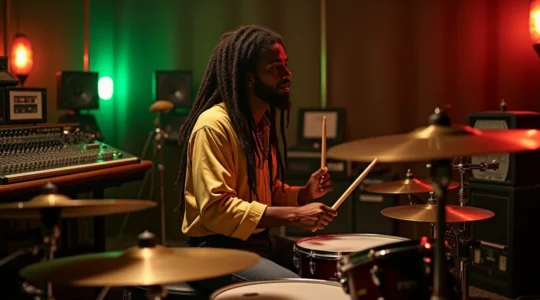
How to Lock in the “One Drop” Rhythm: An Authentic Reggae Feel for Rock Musicians
The secret to the reggae ‘one drop’ isn’t just placing the kick on beat 3; it’s about unlearning your rock instinct to push the beat and learning to treat silence as the groove’s anchor. The empty “one” of the measure…
Read more
How to Start Listening to Jazz Without Feeling Intellectually Overwhelmed?
Many people believe jazz is random, complex music reserved for intellectuals. The truth is, the secret to understanding jazz isn’t about having a higher IQ; it’s about shifting your perspective. Stop trying to listen for a predictable song and start…
Read more
How to Trace the Lineage of Your Favorite Genre Back to its Roots
In summary: Tracing a genre’s history is not about memorizing facts, but about learning to deconstruct music into its core components like rhythm, harmony, and instrumentation. Understanding the difference between a local scene’s innovation and a global trend’s influence is…
Read more