Pop Culture & Entertainment
The landscape of music and entertainment has undergone a seismic transformation in recent years. What once required record label backing, radio airplay, and physical distribution now happens in bedrooms, smartphones, and algorithm-driven platforms. This shift has democratized access while simultaneously creating new gatekeepers—ones made of code rather than corporate hierarchies.
Understanding modern pop culture means grasping the intricate relationship between artistic creation, technological infrastructure, and audience psychology. From the mathematical precision behind chart-topping hooks to the engineering prowess that makes bass frequencies shake your chest, from streaming platform economics to the careful construction of celebrity personas, every element operates within an interconnected ecosystem. This article explores the fundamental forces shaping contemporary music culture, providing a comprehensive foundation for anyone seeking to understand how entertainment works in the digital age.
The Algorithmic Revolution: How Social Media Changed Music
Short-form video platforms have fundamentally altered music composition itself. Songs are no longer structured for radio programmers or album sequencing—they’re engineered for 15-second loops and viral moments. The traditional build-up has been replaced by immediate gratification: choruses now frequently appear within the first ten seconds, a structural shift unthinkable just a decade ago.
This compression of attention has given birth to a new compositional methodology. Artists and producers now think in terms of “hook-ability”—identifying which three to five seconds will compel a user to replay, share, or incorporate into their own content. Think of it like designing a movie trailer that’s only as long as a sneeze, yet must convey enough emotional or sonic impact to stop someone mid-scroll.
The tension between viral fame and career longevity has become the defining challenge for emerging artists. A single viral moment can generate millions of streams overnight, but sustaining that attention requires either consistent algorithmic success or a strategic pivot toward building genuine fan relationships. Many artists face the risk of becoming one-hit wonders not because they lack talent, but because they optimized for virality rather than artistic development.
The Economics Behind the Streams
Playlists have replaced radio as the primary discovery mechanism for music consumption. Being added to a prominent playlist can generate tens of thousands of streams daily, while exclusion means near-invisibility regardless of artistic merit. This has created a new power structure where playlist curators—both human and algorithmic—determine which artists gain traction.
Independent artists navigate a complex landscape of platform economics. The Spotify model prioritizes volume and algorithmic engagement, rewarding artists who release frequently and maintain listener retention. In contrast, platforms like Bandcamp emphasize direct artist-to-fan transactions, allowing musicians to capture significantly higher revenue per sale but requiring more active audience cultivation.
Understanding how to trigger streaming algorithms has become as important as musical skill itself. Key factors include:
- Completion rates: The percentage of listeners who finish your track signals quality to algorithms
- Save and playlist adds: These indicate deeper engagement beyond passive listening
- Share frequency: Social distribution amplifies algorithmic visibility
- Consistent release schedule: Regular output keeps you in algorithmic rotation
However, the dark side of this system is the proliferation of fake streams—artificially inflated play counts that appear to signal popularity but violate platform terms and can result in removal or blacklisting. The risk is significant, as platforms have become increasingly sophisticated at detecting inauthentic engagement.
The Anatomy of a Modern Hit
Chart-topping songs follow surprisingly precise mathematical and psychological formulas. The “Millennial Whoop”—that distinctive “wa-oh-wa-oh” vocal pattern—works because it triggers nostalgic neural pathways while remaining simple enough for immediate participation. It’s the musical equivalent of a comfortable handshake: familiar, non-threatening, and instantly engaging.
Hook placement has evolved into a science. Modern hits typically feature:
- An immediate sonic identifier in the first three seconds
- The primary hook or chorus within 15-20 seconds
- Repetition structures optimized for memorability rather than variety
- Strategic dynamic shifts that create “moment” potential for social sharing
The debate between lyrical specificity and universality represents a fundamental creative tension. Highly specific lyrics create emotional authenticity and connection with particular audiences, while universal themes maximize potential reach. The most successful contemporary artists often thread this needle by using specific imagery to convey universal emotions—think of heartbreak described through particular details that anyone can relate to their own experiences.
There’s also the risk of over-polishing. When every vocal imperfection is corrected and every instrument perfectly quantized, music can lose the human irregularities that create emotional resonance. It’s like comparing a hand-written letter to a corporate email—technically flawless but emotionally sterile. Finding the sweet spot between professional quality and authentic humanity separates memorable music from forgettable content.
Celebrity in the Digital Age
Public personas are no longer accidental byproducts of fame—they’re carefully engineered constructs. Artists maintain visual consistency across platforms, develop signature aesthetic elements, and strategically reveal personal information to create the illusion of intimacy while protecting actual privacy.
Paradoxically, flaws often make icons more relatable and enduring. When a megastar shows vulnerability, makes mistakes, or reveals struggles, they transform from untouchable deity into aspirational human. This relatability creates stronger parasocial bonds—the one-sided relationships fans feel with public figures they’ve never met.
The longevity equation increasingly favors charisma over pure talent. Technical skill matters, but the ability to command attention, tell compelling stories, and evolve a public narrative often determines who sustains a multi-decade career versus who burns bright and fades. Consider it the difference between a virtuoso instrumentalist few remember and a technically adequate performer everyone knows.
Artists must eventually master the rebranding phase. Musical tastes evolve, cultural contexts shift, and audiences age. Successfully transitioning between career chapters—whether that’s genre shifts, visual reinvention, or narrative repositioning—requires understanding when to honor your history and when to decisively break from it. The risk of parasocial burnout looms for artists who feel trapped by fan expectations, unable to grow without alienating their base.
Sound Engineering: The Technical Foundation of Music
Behind every powerful concert experience lies sophisticated audio engineering. Custom speaker stacks aren’t merely about volume—they’re about controlled sonic distribution across physical space. The social impact is tangible: massive sound systems create collective experiences that transform individual listeners into unified crowds.
Why Bass Requires Massive Power
Low frequencies demand exponentially more energy than high frequencies to achieve equivalent perceived loudness. This is why subwoofers are often larger and more power-hungry than tweeters. Bass frequencies also interact more dramatically with room acoustics, creating standing waves and dead zones that require careful management.
The Art of Stack Alignment
Proper speaker alignment ensures that sound waves from different drivers arrive at the listener simultaneously. Misalignment creates phase cancellation—where sound waves interfere destructively, creating thin or inconsistent audio. Professional systems use precise physical positioning and digital delay to maintain sonic coherence across the listening area, often called the “sweet spot.”
Active vs. Passive Crossovers
Crossovers split audio signals into different frequency ranges for appropriate drivers. Passive crossovers use physical components after amplification, while active crossovers split signals before amplification, allowing independent control of each frequency band. Active systems offer greater precision but require more complex setups. The risk of blown drivers—speakers damaged by excessive power or incorrect frequency distribution—increases with improper crossover configuration.
Live Performance in the Digital Age
Technology has fundamentally altered what’s possible on stage. Immersive audio systems create three-dimensional soundscapes where instruments appear to originate from specific locations in space. Visual production optimized for small screens acknowledges that most attendees will experience moments through their phones, even when physically present.
Virtual performances have evolved from emergency pandemic solutions into legitimate artistic formats. However, hologram performances remain controversial—some view them as innovative tributes to deceased artists, while others see them as exploitative digital necromancy. The debate centers on artistic intent, estate permissions, and whether technology serves the art or replaces it.
The virtual versus physical attendance question isn’t binary. Hybrid models offer accessibility to distant or mobility-restricted fans while preserving the irreplaceable energy of shared physical space. The primary risk is technical failure: when software crashes or connections fail during a live moment, there’s no retake. This demands redundancy, testing, and experienced technical teams who can troubleshoot in real-time.
Understanding pop culture and entertainment today means recognizing these interconnected systems—where algorithmic optimization influences creative decisions, where streaming economics reshape career strategies, and where technology both enhances and complicates human connection. The artists, engineers, and industry professionals who thrive are those who understand not just their craft, but the larger ecosystem in which it exists.
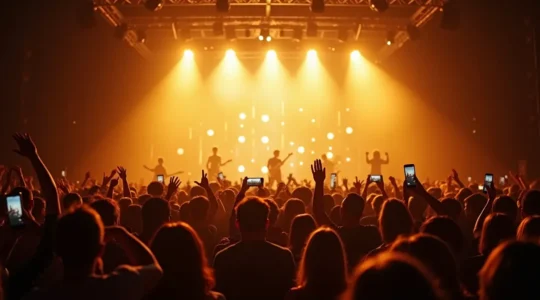
How to Integrate Augmented Reality into Live Shows Without Distracting From the Music?
Contrary to popular belief, effective AR in live music isn’t about adding spectacular digital layers; it’s about mastering the art of technological subtlety to deepen the audience’s existing emotional connection. Success hinges on managing the audience’s “cognitive load budget,” ensuring…
Read more
How to Build a “Rockstar” Persona Without Losing Your Private Sanity?
Your public persona is not an authentic extension of you; it is a strategic character built to protect your sanity and monetize your art. Authenticity is a product to be manufactured and sold, not a raw state of being to…
Read more
Why Do the Same 4 Chords Appear in 80% of Billboard Top 100 Hits?
The dominance of four-chord songs is not creative laziness; it’s a calculated strategy of structural optimization for the modern streaming economy. Simple, repetitive patterns are processed faster by the brain, triggering an immediate sense of familiarity and pleasure. Economic pressures,…
Read more
Generate Real Income from Streaming with Under 1M Plays: A Financial Strategy
The common belief is that you need millions of streams to earn a living from music. The financial reality is that a strategic approach to converting a small, dedicated fanbase is far more profitable. Algorithmic success relies on building a…
Read more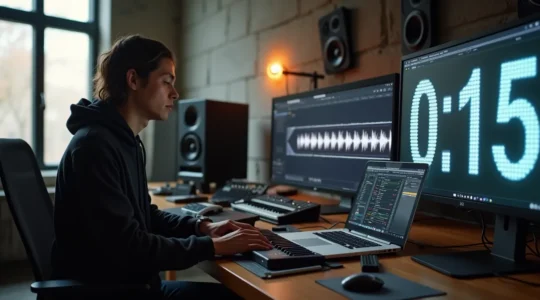
How to Write Songs That Thrive in the 15-Second Attention Economy
Surviving the 15-second scroll isn’t about chasing trends, but about strategically engineering your authentic music to create ‘attention funnels’. Viral moments are designed, not accidental, using “open loops” in lyrics and visuals that invite user participation. A sustainable career is…
Read more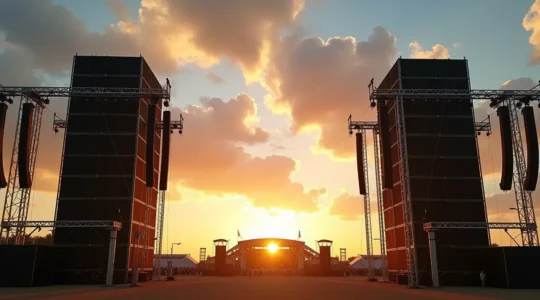
How to Build a Sound System That Physically Moves the Crowd?
Moving a crowd isn’t about brute-force volume; it’s the science of controlled low-frequency energy. True physical impact comes from infrasonic frequencies (below 30Hz), which require immense, well-managed power. Strategic speaker stacking (like cardioid arrays) is crucial to focus bass on…
Read more