Visual Arts
Visual arts represent humanity’s oldest form of communication and self-expression, spanning from ancient cave paintings to contemporary digital installations. Whether you’re drawn to the tactile satisfaction of applying paint to canvas, the precision of photographic composition, or the bold statement of public murals, the visual arts offer countless pathways for creative exploration. What unites these diverse practices is their fundamental reliance on sight as the primary sensory gateway, transforming raw materials and concepts into images that communicate, provoke, and inspire.
Understanding visual arts means grasping both the technical foundations of various mediums and the conceptual frameworks that give artworks meaning. This knowledge empowers you to create with intention, appreciate with depth, and navigate the art world with confidence. From mastering the physical properties of different materials to developing a critical eye for composition and concept, the journey through visual arts is as much about training your perception as it is about training your hands.
Traditional Visual Art Mediums: Foundation and Craft
Traditional mediums form the backbone of visual arts education, each demanding unique technical understanding and offering distinct expressive possibilities. These time-tested practices continue to evolve while maintaining their essential characteristics.
Canvas Painting: Mastering Surface and Substance
Canvas painting requires understanding the interplay between support, ground, and paint layers. The choice between linen and cotton substrates affects everything from archival quality to paint adhesion—linen’s tighter weave and natural oils provide superior longevity and texture, while cotton offers accessibility for practice and experimentation. Properly stretching canvas ensures consistent tension that prevents warping and sagging over time, a skill that separates amateur from professional presentation.
The fundamental divide between acrylic and oil paints extends beyond drying time to encompass working methods entirely. Acrylics dry through water evaporation in minutes to hours, demanding swift execution but allowing rapid layering. Oils cure through oxidation over days or weeks, enabling extensive blending and revision but requiring adherence to the “fat over lean” principle—each successive layer must contain equal or greater oil content to prevent cracking. Maintaining your brushes through proper cleaning and storage protects your investment and ensures predictable paint application.
Watercolor: Embracing Controlled Chaos
Watercolor’s distinctive character emerges from its fundamental unpredictability—the medium refuses complete control, demanding instead a partnership between artist intention and material behavior. Paper weight determines buckling resistance, with heavier stocks (300 gsm or above) remaining flat when saturated, while lighter weights require stretching or blocking to prevent distortion that disrupts even washes.
The wet-on-wet technique epitomizes watercolor’s unique properties, allowing pigments to mingle and bloom directly on the paper in ways impossible to fully predict or replicate. Pan paints offer portability and economy, while tube paints provide intensity and volume for larger works. The persistent challenge of “muddy” colors—when too many pigments mix into chromatic neutrality—teaches restraint and intentional color mixing. Masking fluid protects white areas from paint application, though its removal requires careful timing to avoid paper damage.
Drawing and Sculpture: Line, Form, and Space
Drawing cultivates observational skills foundational to all visual arts. Figure drawing demands understanding both anatomical structure and gestural movement, balancing accuracy with expressive energy. The concept that negative space—the areas around and between subjects—actively defines positive forms represents a perceptual shift crucial to accurate representation. Sighting measurements translate three-dimensional reality to two-dimensional surface through comparative proportions and angles.
Sculpture extends visual thinking into three dimensions, where material balance and viewing angles create entirely new considerations. The armature functions as skeletal support, determining a sculpture’s stability and gesture before material application begins. Understanding subtractive processes (carving away material) versus additive methods (building up form) shapes both technical approach and conceptual thinking. Air pockets trapped in clay cause explosive failures during firing, making proper wedging and hollow-building techniques essential for ceramic work.
Contemporary Visual Practices: Technology and Innovation
Contemporary visual arts embrace technological tools while maintaining fundamental artistic principles, expanding the definition of what constitutes visual creation.
Photography: Intention Beyond Documentation
Photography transcends mere recording when practitioners understand how light quality fundamentally alters emotional impact. Harsh midday sun creates entirely different psychological effects than golden hour warmth or overcast softness. Long exposure techniques blur temporal boundaries, rendering water as silk and crowds as ghostly impressions, transforming reality into interpretive vision.
The digital versus film workflow debate centers less on superiority than on intentional choice—digital allows immediate feedback and extensive editing flexibility, while film enforces disciplined shooting and offers distinctive tonal characteristics. The risk of over-editing in digital work parallels any medium’s tendency toward excess; restraint serves the image’s core intention. Depth of field controls viewer attention through selective focus, isolating subjects or establishing environmental context through the deliberate choice of aperture.
Multimedia and Projection: Breaking Sensory Boundaries
Multimedia art dissolves traditional medium boundaries, particularly between auditory and visual experiences. Album artwork doesn’t merely package music—when conceived holistically, visual design defines and extends sonic identity, creating synaesthetic experiences where imagery and sound reinforce unified artistic statements. Projection mapping transforms architectural surfaces into dynamic canvases, requiring technical expertise in spatial calibration alongside artistic vision.
The challenge of sensory overload becomes acute when multiple stimuli compete for attention. Successful multimedia work orchestrates elements into coherent experiences rather than overwhelming collages. Color palette optimization across media ensures visual cohesion whether viewed on screens, prints, or projected surfaces.
Sequential and Narrative Visual Art
Comics, graphic novels, and visual storytelling harness the unique properties of sequential imagery to construct narratives impossible in single images or text alone. The “page turn” functions as a revelatory device, controlling information flow and creating suspense through spatial arrangement. Thumbnailing—creating small, rough compositional sketches—allows rapid exploration of page layouts and narrative pacing before committing to final artwork.
Balancing text and image represents the medium’s central challenge; neither should merely illustrate the other, but rather create meaning through their interaction. The “talking heads” problem—panels of static figures speaking without visual dynamism—drains energy from potentially compelling scenes. Color scripts plan emotional progression through chromatic shifts across pages or sequences, using hue and saturation as narrative tools equivalent to word choice in prose.
Public and Street Art: Context, Ethics, and Community
Street art and graffiti exist at the intersection of artistic expression, public space, and legal frameworks. Wall texture dramatically affects aerosol paint control—smooth surfaces allow fine detail and clean lines, while rough brick or concrete create texture that becomes part of the work’s character. Grid transfer methods scale smaller designs to wall-sized proportions accurately, though many practitioners develop freehand scaling abilities through practice.
The hierarchy between tags (stylized signatures), throws (quick multi-color pieces), and pieces (elaborate productions) reflects both skill progression and time investment. Beyond technique, toxic fumes from spray paint demand proper respiratory protection, a safety concern often overlooked by beginners. The most enduring public art prioritizes community engagement—understanding local context, seeking dialogue with residents, and creating work that enriches rather than imposes upon shared space.
Understanding and Collecting Visual Art
The art market operates with often opaque valuation systems, but understanding fundamental principles demystifies the process. Gallery representation provides artists with exhibition opportunities, credibility, and sales infrastructure, while galleries curate stable rosters that shape market perception and pricing. Art valuation methodology considers factors including artist reputation, provenance, condition, rarity, and current market demand.
The original versus print investment decision balances budget against appreciation potential and personal satisfaction. Original works carry uniqueness premium and greater value appreciation potential, while high-quality prints democratize access to imagery at accessible price points. Trend-driven collecting poses the risk of acquiring work whose value depends on temporary fashion rather than enduring quality. Optimizing collection display considers lighting, spacing, and sightlines that allow each work appropriate contemplation space without visual competition.
Developing Critical Vision and Artistic Voice
Cultivating a critical eye—the ability to analyze and articulate artistic opinion—transforms passive viewing into active engagement. Recognizing that subjective response carries validity liberates viewers from seeking “correct” interpretations, while visual analysis methodology provides frameworks for examining compositional choices, technical execution, and conceptual content. The ongoing dialogue between valuing technical mastery versus conceptual innovation reflects art’s dual nature as craft and idea.
The risk of creating derivative work—pieces that mimic existing styles without adding personal vision—represents every developing artist’s challenge. Growth emerges from absorbing influences while finding authentic voice. Portfolio curation becomes an artistic act itself, selecting and sequencing work that demonstrates range, consistency, and artistic identity to viewers, educators, or potential collectors.
Visual arts encompass extraordinary diversity of practice, yet all share the fundamental act of translating internal vision into external form through visual means. Whether your path leads toward traditional mastery, contemporary experimentation, or critical appreciation, understanding both technical foundations and conceptual frameworks empowers meaningful engagement with this essential dimension of human expression.
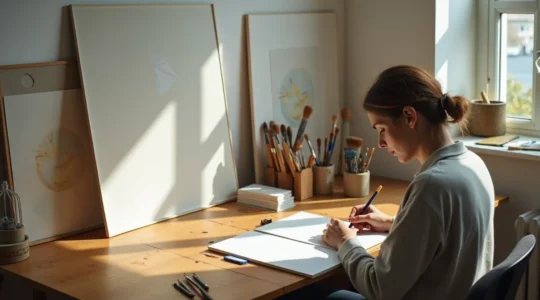
How to Write an Artist Statement That Isn’t Pretentious Gibberish
Most artists are taught that an artist statement must explain their work, which often leads to pretentious, academic jargon. The reality is the opposite. A powerful statement doesn’t dictate meaning; it creates a generous invitation for the viewer. This guide…
Read more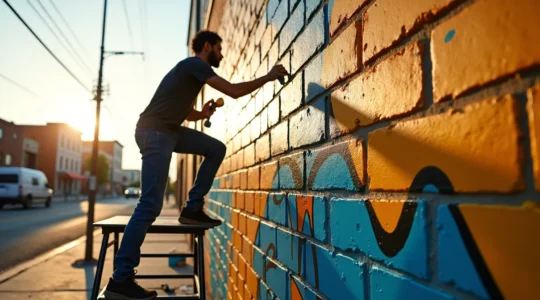
How to Paint a Public Mural: The Pro’s Guide to Going Legit
In summary: Going pro isn’t selling out; it’s a power move that requires translating street code into legal contracts. Understanding surface science (brick vs. concrete) is crucial for your art’s longevity and your budget. Legal protection for your work starts…
Read more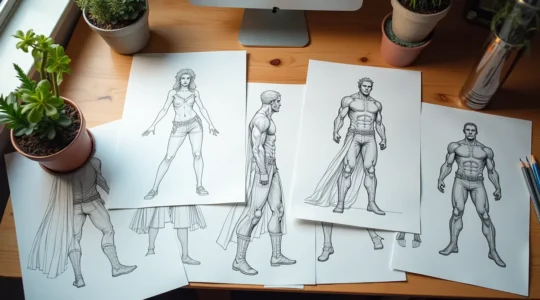
Character Consistency in a Graphic Novel: A 20-Page Blueprint for Visual Storytelling
True character consistency isn’t about tracing, but about mastering a visual language to tell a better story. It involves codifying a character’s “emotional thumbprint” directly into your script before drawing a single line. It leverages disciplined muscle memory, much like…
Read more
How to Use the Rule of Thirds to Create Tension in Landscapes?
Mastering composition isn’t about memorizing rules like the ‘rule of thirds.’ The true path to creating tension and emotion lies in understanding the universal principles of visual grammar—the psychological use of light, space, and focus. This understanding allows an artist…
Read more
How to Balance a Sculpture Without Visible Supports?
Achieving invisible balance in sculpture isn’t about hiding supports; it’s about mastering the physics of gravity as a structural engineer would. The center of gravity is not a fixed point to be found, but a variable to be controlled through…
Read more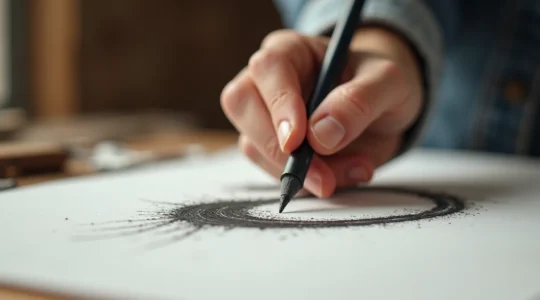
How to Capture the Gesture of a Pose in Under 30 Seconds?
Your 30-second gesture drawings feel stiff and robotic because you’re drawing isolated shapes, not interconnected forces. The key to capturing life is to stop seeing outlines and start understanding the body as an anatomical system of weight, tension, and energy…
Read more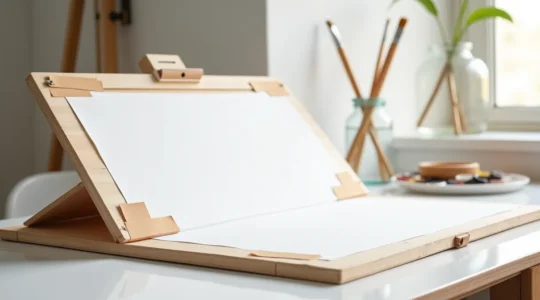
How to Prevent Your Watercolor Paper From Buckling When Wet
The frustrating buckling of watercolor paper isn’t a flaw to be fought, but a natural property to be understood. The key to achieving perfectly flat washes is not to use less water, but to master the paper’s ‘breath’—its cycle of…
Read more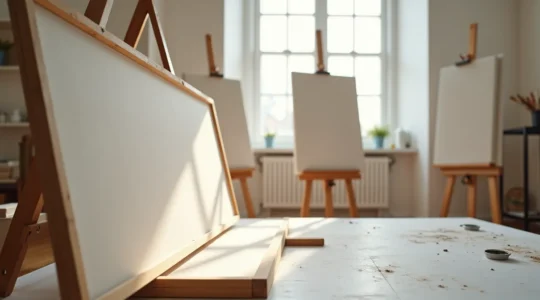
How to Prime a Canvas to Prevent Oil Paint From Rotting the Fabric?
Contrary to common advice, priming a canvas is not about applying gesso; it’s a precise chemical process to shield fabric fibers from the corrosive acid in your oil paint. Sizing with PVA is the non-negotiable first step to create an…
Read more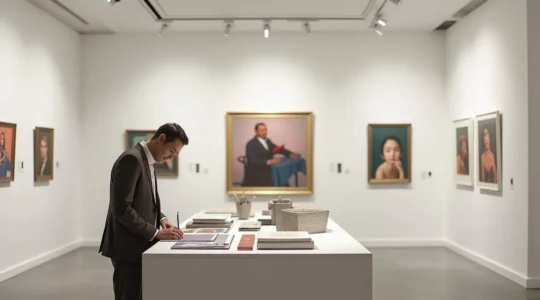
How to Invest in Emerging Artists Before They Become Unaffordable?
Investing in emerging art isn’t gambling; it’s a data-driven discipline focused on market validation over personal taste. Gallery representation and institutional support are far stronger value indicators than social media hype. Provenance documentation and edition scarcity are critical financial multipliers…
Read more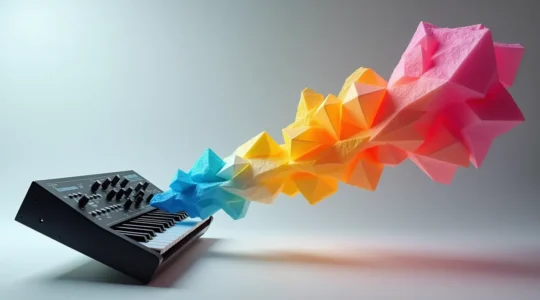
How to Translate Sound into Visual Art Through Synesthesia Techniques?
Translating music into art isn’t about capturing fleeting emotions; it’s about building a deliberate system of sensory translation. Establish a ‘visual grammar’ that systematically links specific sounds (timbre, rhythm, frequency) to visual elements (shape, texture, color). Map audio textures like…
Read more